Born 1946, Singapore. Family of Wenchang, Hainan. Lives in Hong Kong.
Wong Sun Ming
王新明
Yixiang — an eleventh-century method, carried into European oil across sixty years of looking.
- LineageSole studio disciple of Hu Shanyu (1909–1993)
- TrainedChina Academy of Art, Hangzhou, 1985
- PrefacesQuan Shanshi, China Academy of Art
- PublishedTwo collected volumes, 1992 and 2010
- WritingCriticism and academic essays, Hong Kong press, from 1986
- Working1992 to 2025, seven series under a single idea
The idea
Yixiang 意象
The word that governs every series is 意象, yixiang. It is an old term in Chinese poetics: the point at which a feeling and a thing seen become inseparable, so that the image is no longer a description of the world but a state of mind that has taken shape. A painter working in yixiang does not record the Li River. He paints what the river does to him, and the river is the means by which that state becomes visible.
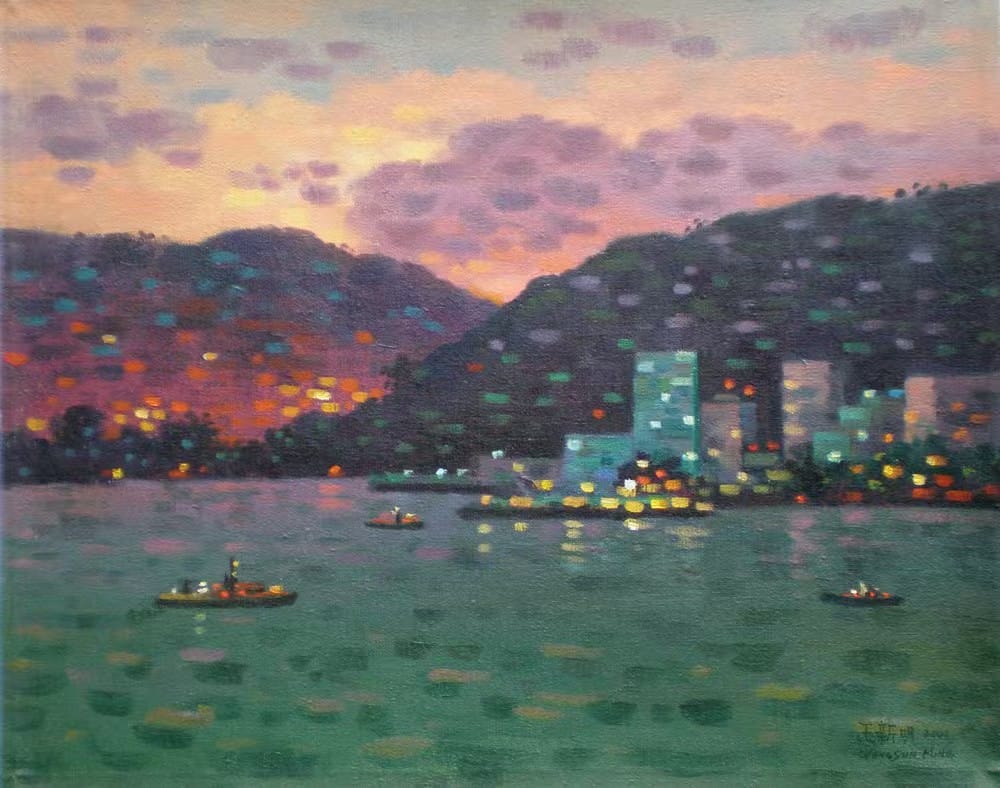
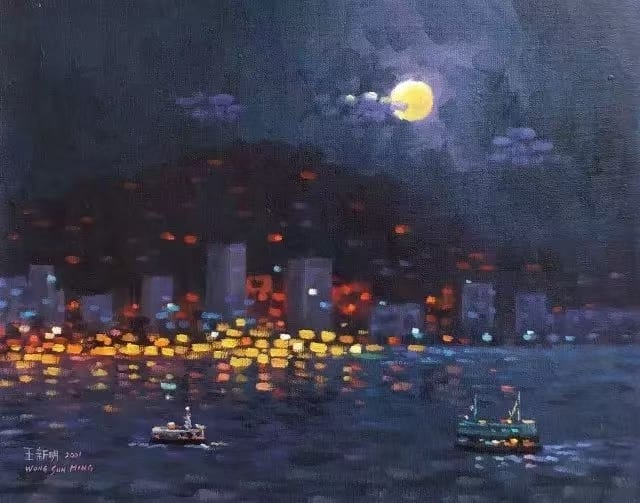
The method belongs to the eleventh century. Mi Fu set outline aside. Rather than draw the edge of a hill, he built it from accumulated horizontal dots, varying their density and their wetness until the form emerged from atmosphere alone. The method passed to his son, Mi Youren, and became one of the enduring idioms of Chinese landscape.
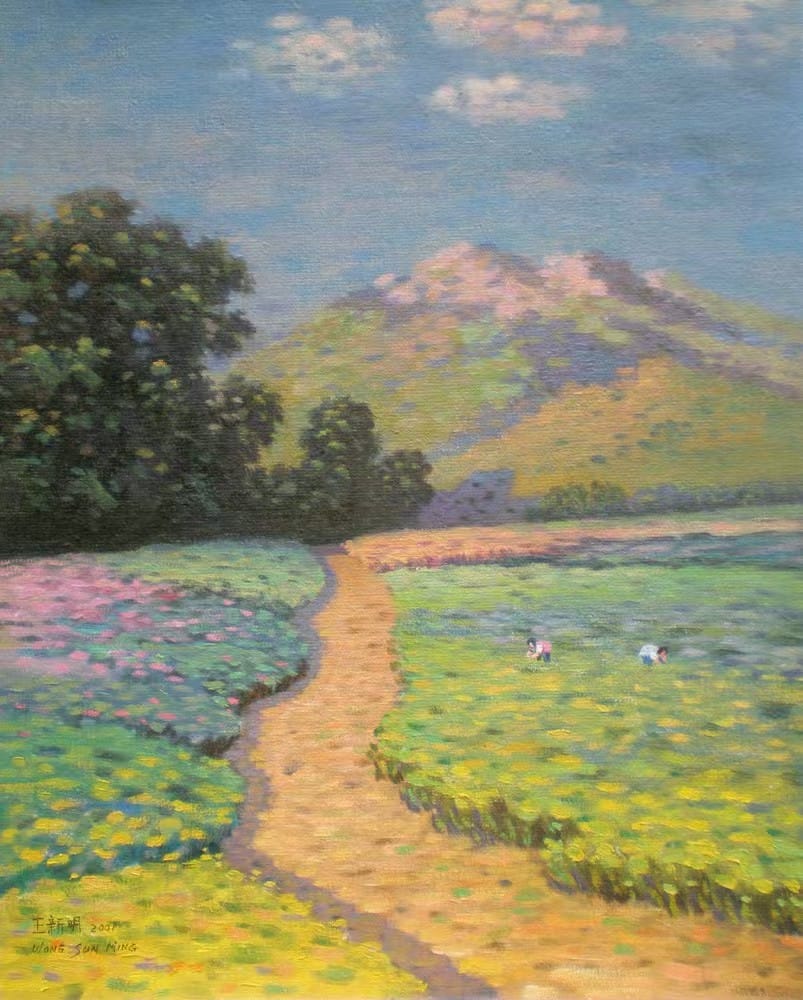
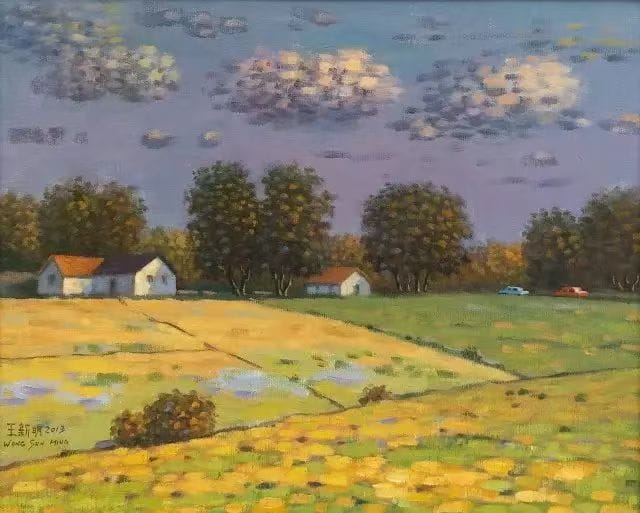
Wong carries that logic into oil, and then well beyond landscape: into plum blossom, into flowers in a vase, into a sun over snow. In the fields before the village, not a stalk is drawn. The ground is assembled from thousands of small touches, and distance is held not by the lines of perspective but by the dots themselves, cooling and thinning as they recede.